Bird exclusion for balconies and building openings
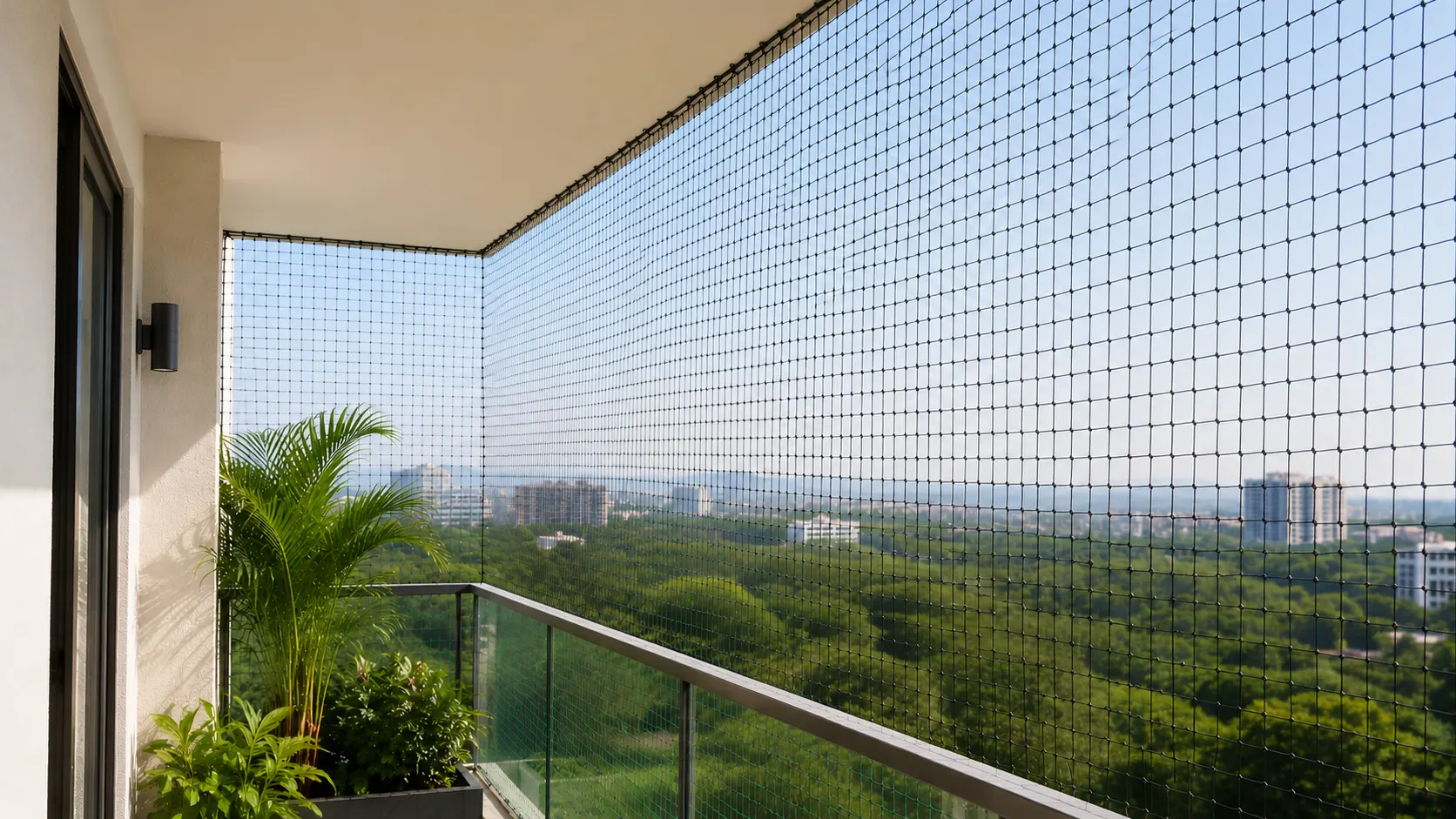
Bird-entry reduction netting for balconies, ducts and relevant building spaces. This page explains common project applications and information useful before requesting a quotation.
Where this type of netting is used
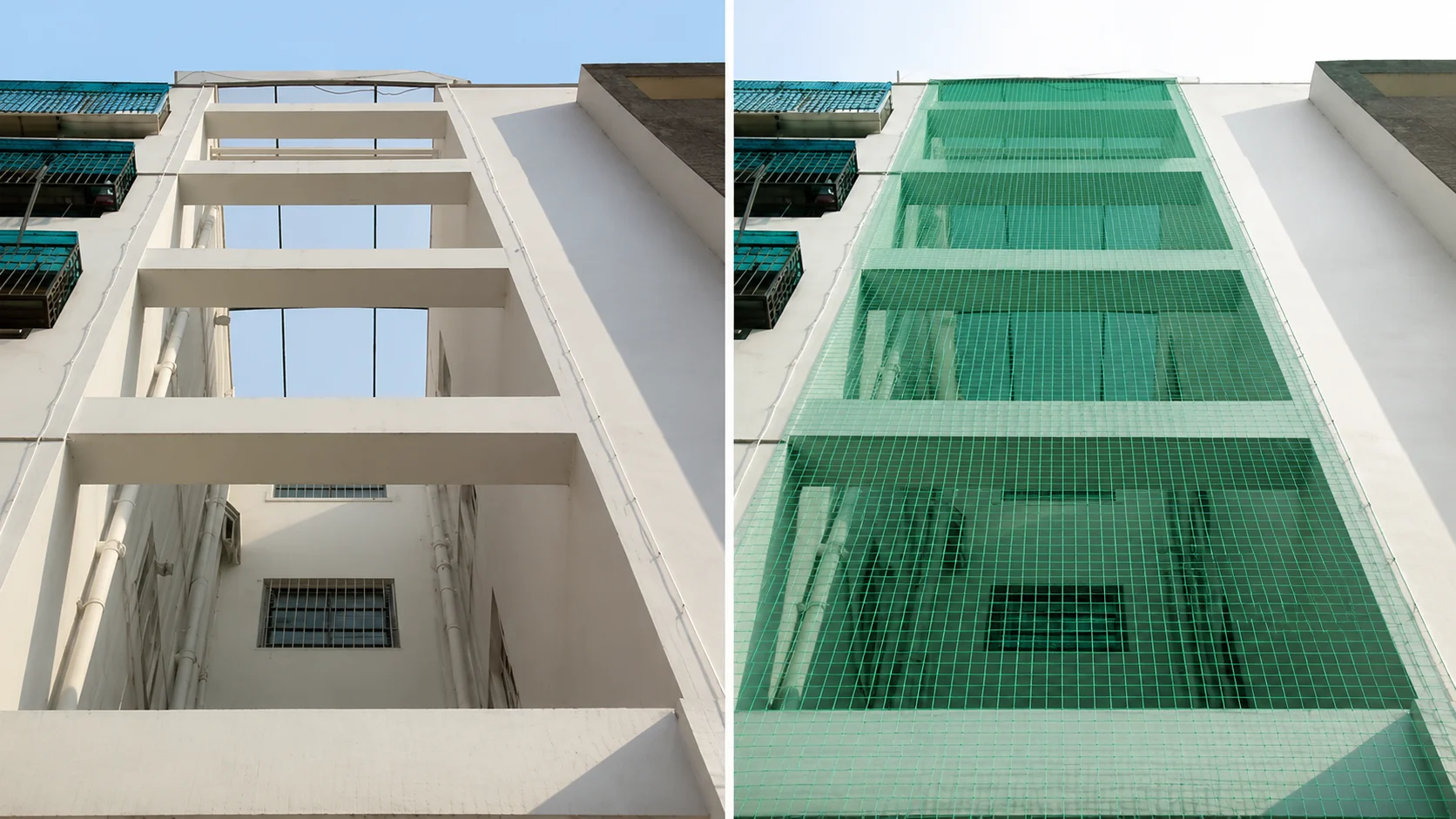
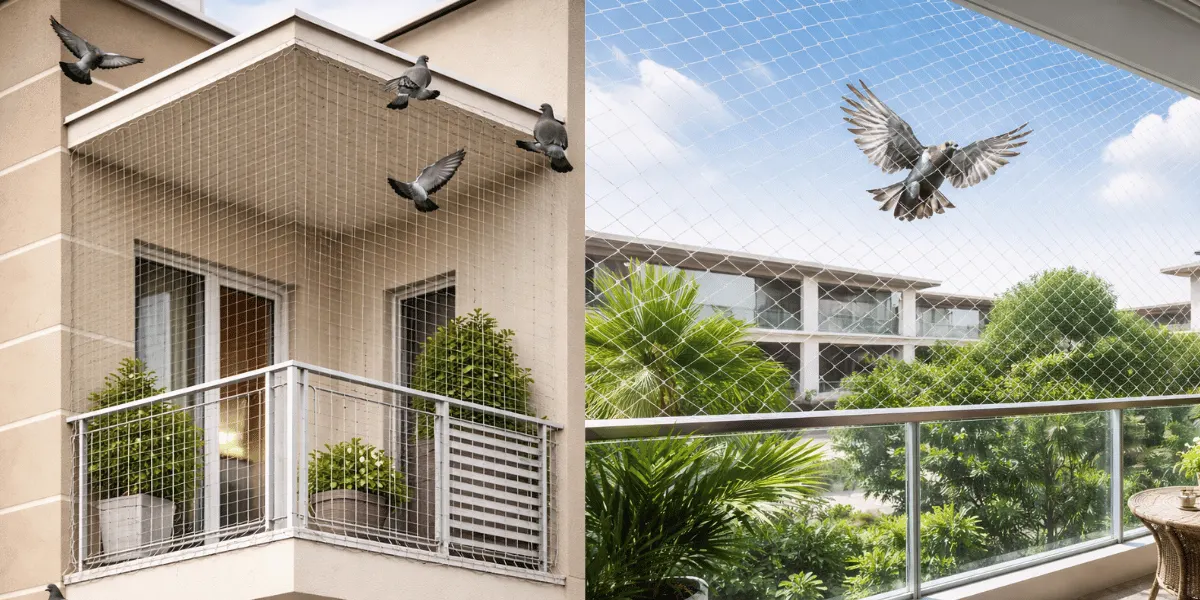
Pigeons commonly enter balconies, ledges, duct areas and open building cavities. Netting can help prevent access when the opening is measured and covered appropriately, but surrounding gaps and existing nesting activity must be understood.
For a practical enquiry, identify exactly where birds enter, whether the netting must allow regular human access and whether neighbouring balconies or service ducts share the opening.
Planning a suitable installation
Share images showing the full area rather than only the birds. Measure opening width and height where possible. If a duct or shared shaft is involved, obtain any required property-management permissions and confirm ventilation, fire access and maintenance requirements.
Humane exclusion is important. Any birds or active nests must be handled in accordance with applicable local wildlife rules and safe practices, not trapped behind newly fitted netting.
Materials, fixing and maintenance questions
Mesh opening, UV exposure, fastening quality, access panels and coverage of side gaps should be reviewed before a proposal is accepted. The solution may differ between a single balcony and a multi-floor shaft.
No netting should be promoted as a guaranteed permanent fix. Inspection after installation and attention to damaged ties or new gaps can affect effectiveness.
Common applications
- Apartment residents
- Commercial properties
- Facility managers
Project details worth sharing
- Pigeon entry points
- Window and duct access
- Humane exclusion planning
- Where are pigeons entering?
- Does the site have active nesting?
- Will maintenance access be needed later?
Research-backed buying guides
Explore the relevant requirements before comparing written quotations.
Safety Net Price Factors →Bird Net Installation Checklist →Safety Net Selection Guide →